30 July 2026 · Instagram Ban Service · ~10 min read
How to ban an Instagram account permanently, and what actually makes a ban stick
You cannot ban an Instagram account yourself. Instagram disables accounts, and it makes a removal permanent only for severe or repeated Community Guidelines breaches it can verify. Your job is evidence: file the exact official report that matches the violation, so the decision holds instead of being appealed away.
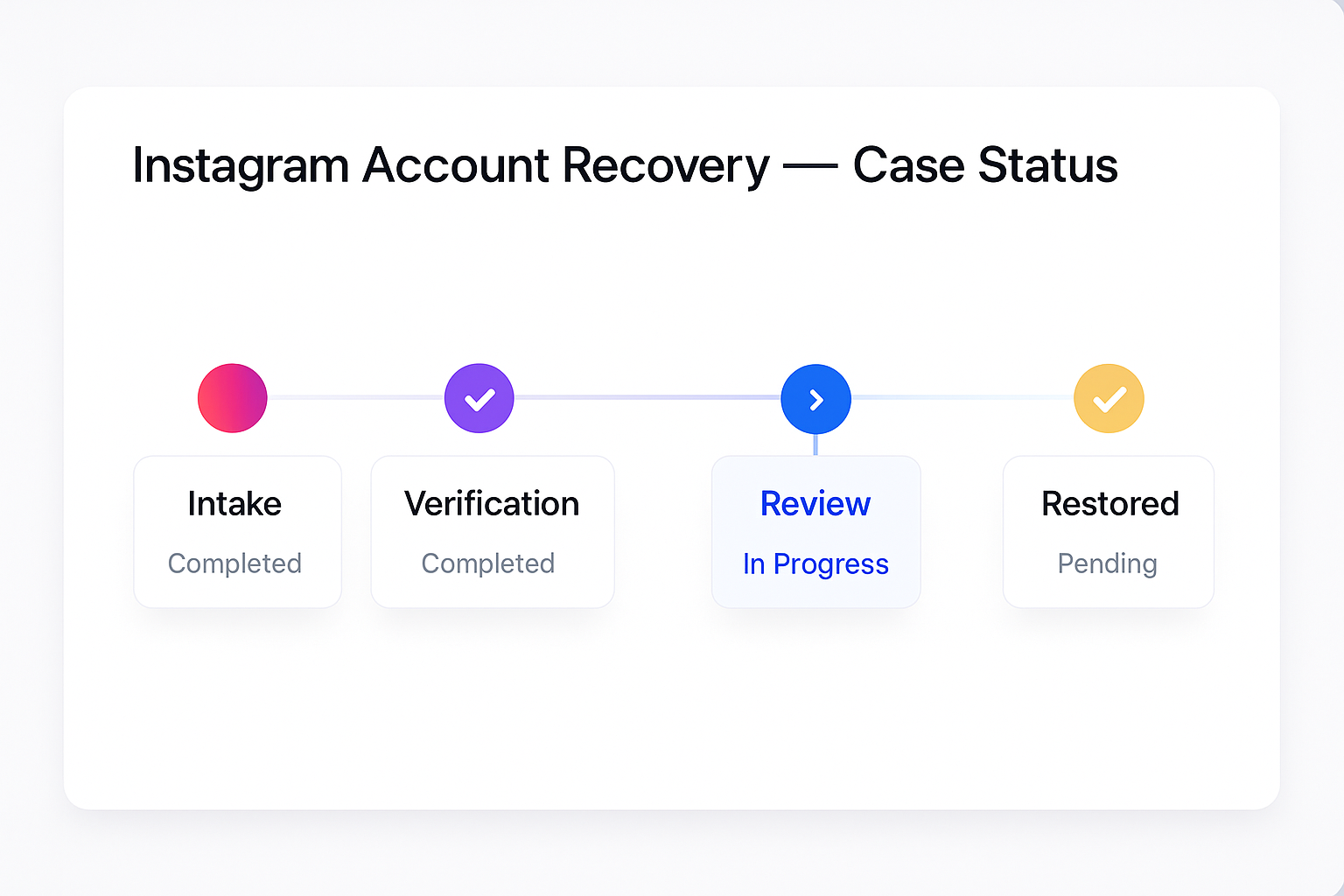
Nobody hands you a ban button. Not a panel, not a bot, not a paid service with a countdown timer on its sales page.
The phrase assumes a control you do not have. What you can steer is which of Instagram's two enforcement tracks your report lands on, and whether the evidence behind it survives the appeal that usually follows. That gap is the difference between an account that disappears for three days and one that never returns, and almost every page ranking for this query skips straight past it.
What "permanently banned" means on Instagram, and what it doesn't
Permanent means the account is disabled with no route back through normal review. Meta holds that outcome for severe or persistent breaches; everything short of it is reversible by design. Instagram runs at least five distinct enforcement states, and only the last is what people picture when they type this search.
| Enforcement state | What sets it off | How long it lasts | Can the account come back? |
|---|---|---|---|
| Warning | A first strike on a lower-severity policy | No functional limit at all | There is nothing to reverse |
| Feature restriction | Repeat strikes, or spam-shaped behaviour | Hours up to 30 days | Yes, it lapses by itself |
| Content removal | One post, Reel, Story or comment breaking a rule | Permanent for that item only | The profile stays live |
| Disabled, review still open | Accumulated strikes, or a case-by-case decision | Until the review closes | Yes, if the appeal succeeds |
| Permanently disabled | Egregious violations, or a failed final review | Indefinite | Only if Meta reverses itself |
Most people who set out to report and disable an Instagram account land in rows two and three and read it as failure. It usually is not. A removed post is the record that starts a strike history, and strike histories are what eventually push an account into row five. The mistake is expecting row five from a single tap, then giving up when a reported Story or post comes down on its own. If your goal is the whole profile rather than one item, the mechanics differ enough that we set them out separately under Instagram account takedown.
How many reports to ban Instagram account holders? None, by itself
Volume decides nothing. Meta states plainly that the number of times something is reported does not determine whether it is removed, and that single sentence dismantles the entire paid-panel market. A reviewer, human or automated, compares the reported content against a written policy. Send 10,000 identical complaints about a compliant profile and you get 10,000 dismissals.
The corollary is the part worth acting on: one report can be enough when the breach is severe and documented. So the question is not how many people you can persuade to tap Report. It is whether the one report you file names the right policy and carries proof a reviewer can confirm in seconds. We have taken apart what actually happens when you mass report an Instagram account, why an Instagram mass report bot mostly harvests logins, why the spam report bot pitch fails on the same arithmetic, and which reporting tools are genuinely official. Coordinated reporting also carries its own hazard: Meta treats organised false flagging as inauthentic behaviour, so the campaign can be actioned instead of the target.
Strikes expire after a year, so a slow drip of reports never adds up
This is the mechanic that decides whether a ban is even possible, and it is missing from every page currently ranking for this query. Meta counts strikes against an account, then acts on the count. The company also states that all strikes on Facebook or Instagram expire after one year.
Run the arithmetic and the strategy collapses. An account picking up two or three strikes a year never reaches a removal threshold, because the early ones fall off the clock before the later ones land. Patience is not a tactic here; it is the thing working against you. What escalates an account is density, not duration: several verified breaches close together, on policies Meta ranks as serious.
There is a second detail almost nobody gets right. The published strike ladder is Facebook's, not Instagram's. Meta's page on restricting accounts lays out a warning at one strike, feature limits from two to six, then a one-day content restriction at seven, three days at eight, seven days at nine and thirty days at ten or more — and then notes that while strikes are counted on both platforms, "these restrictions only apply to Facebook accounts." So anyone quoting the seven-strike or ten-strike numbers at you for Instagram is reading the wrong column. On Instagram, Meta's guidance on disabling accounts is looser: after five strikes an account may face further 30-day content restrictions, "or we may remove your account, depending on the severity and frequency of the violations."
Severity and frequency. Those two words are the whole game, and they are why the honest answer to "how do I make this permanent" is a question about the violation, not about your effort. A profile posting a stolen photo has one shape. A profile running an investment giveaway scam across dozens of victims has another, and the second one accumulates faster because each fresh scam post is a new breach on a policy Meta enforces hard.
The violations that get an account permanently disabled after one post
A second track exists alongside strikes, and it skips the ladder entirely. Meta says a violation can be grave enough — child sexual exploitation content is its own stated example — that it disables an Instagram account after one occurrence. The same track covers dangerous individuals, convicted sex offenders, and accounts created to get around an earlier restriction. Nothing accumulates. The account goes.
Until recently that track was largely undocumented from the outside. That changed on 4 June 2026, when Meta's Oversight Board published its first ruling on a permanent account disablement. The case involved an Instagram account with more than 70,000 followers, disabled in 2025 after posts that included two visual threats against a female journalist, one showing a bullseye over her face. The Board upheld the ban, agreeing Meta "was correct to permanently disable the account because of the severe threats of violence." It also found Meta had left itself with "no intermediate options between permanent disablement and leaving the strikes system to run its course for egregious policy violations," and criticised the delay before those threats were removed.
Read that as a benchmark rather than a headline. Credible threats of violence against an identifiable person cleared the bar for permanence at a 70,000-follower account. Insults did not. Rudeness did not. If you are documenting a stalker, an impersonation or blackmail account, or sextortion, you are working in the categories where permanence is realistic, and your evidence should say so explicitly rather than leaving a reviewer to infer it.
How to get an Instagram account banned fast, and what fast actually means
Fast is a property of the queue your report enters, not of how quickly you submit. Severe-harm categories are triaged as urgent; a bullying complaint against an established account is not. No official service level exists, and any figure you have seen quoted at 24 or 48 hours was invented by whoever was selling you something. What you control is whether your submission arrives complete.
- Screenshot first, with dates and the handle visible. Offenders delete the evidence the moment a report lands, and a review of content that no longer exists usually closes as no action.
- Name the policy, not the feeling. "Scam or fraud" with a payment screenshot beats "harassment" attached to the same post.
- Use the dedicated form where one exists: impersonation at help.instagram.com/contact/636276399721841, copyright at /552695131608132, and the under-13 report at /723586364339719, which needs only a username. In-app reporting is the fallback, not the default.
- Report the pattern, not one post. Several dated items on the same policy read as frequency, which is half of Meta's stated test.
- Track it under Settings, then Help, then Support Requests, and keep the case reference.
That sequence is the same one behind getting a rule-breaking account banned and behind a full account takedown. Where a stolen handle is involved, reclaiming the username is a separate request you file after the removal, not part of it.
Why a permanent ban still comes back, and the one route that closes it
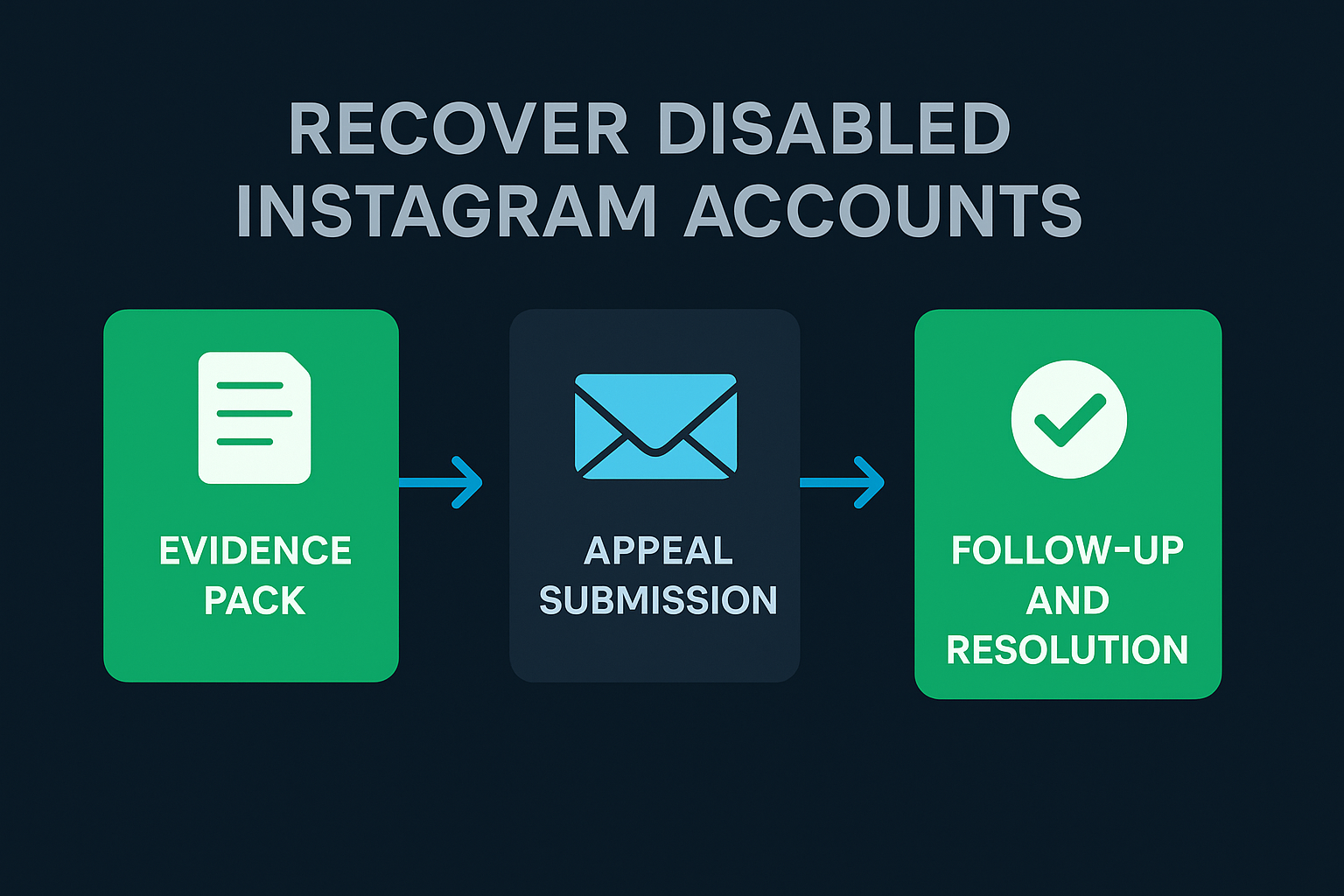
Because the other side gets an appeal, and appeals work more often than the word "permanent" suggests. Meta told the world as much in January 2025, conceding in its own policy announcement that "one to two out of every 10 of these actions may have been mistakes". That admission was aimed at over-enforcement against ordinary users. It cuts the other way too: a thin report against a real violator is exactly the kind of decision an appeal reverses.
The odds shifted again this year. Meta widened AI's role in account enforcement in March 2026 and cut moderation staff, according to New York Times reporting published on 26 July 2026; Meta says the newer systems make 13% fewer mistakes than human reviewers while catching 10% more violations, and spokesperson Daniel Roberts said "AI is delivering on both." More than 60,000 people have since signed a petition asking Meta to explain the bans it hands out. Either way, more of the first decision and more of the appeal are now machine-made, and machines reverse cleanly when the file is thin.
Then there is the replacement account, which is where most people quietly give up. It should be the opposite. Meta's Account Integrity policy covers accounts "created or repurposed to evade a previous account or entity removal, including those assessed to have common ownership," and a report that names the connection is doing work no in-app tap can do on its own. In March we handled a cloned-boutique case where the fake shop came back twice under near-identical handles; the report that finally held was the third one, the one that listed both dead handles, the reused product photos and the same payment link, instead of treating the new profile as a fresh complaint. Say the old handle out loud in the report. That is the single most useful sentence you can write.
If the account you want removed is posting your own material, a copyright claim is sturdier than a behaviour report, because ownership is checkable and opinion is not. The routes for getting someone's Instagram deleted and for buying help through an Instagram ban service both come down to the same thing in the end: whose paperwork survives review.
When is a permanent ban not the goal you should chase?
When the harm outruns the platform. A disabled account does not recover money, does not stop an offline stalker, and does not delete what has already been copied elsewhere. Child safety material belongs with NCMEC's CyberTipline and the police before any Instagram report, and a credible threat of violence belongs with local law enforcement on the same day you see it. Instagram enforcement is a cleanup step, not a remedy.
There is also the case where a restriction serves you better than a ban. A restricted account leaves evidence in place and stays traceable; a deleted one takes its own posts with it, which matters if you are heading toward a legal claim.
So, the committed version. Pick the single most serious policy the account breaks, gather three or four dated items proving it, file through the dedicated form rather than the in-app menu, and report every replacement handle as evasion rather than as a new problem. That is what makes removal stick. If you would rather hand the paperwork to people who file it daily, the Instagram Ban Service team works through official channels only — send the case through our contact page, or browse the rest of the reporting solutions if you want to file it yourself.
Sources
- Meta Transparency Center: Counting strikes (strikes expire after one year; single-occurrence disables)
- Meta Transparency Center: Restricting accounts (the strike ladder, and that it applies to Facebook accounts)
- Meta Transparency Center: Disabling accounts (five strikes, severity and frequency)
- Oversight Board, 4 June 2026: first ruling on a permanent Instagram account disablement
- Meta, 7 January 2025: "one to two out of every 10 of these actions may have been mistakes"
- Meta Help Center: report count does not determine removal
FAQ
Can one report get an Instagram account permanently banned?
Yes, for the severe categories. Meta says a violation can be grave enough, such as child sexual exploitation content, that it disables an Instagram account after a single occurrence. For ordinary rule-breaking the first report produces a warning or a content removal instead, and repetition is what escalates it.
How long does a permanent Instagram ban take to become final?
No published timetable exists, and any service quoting one has invented it. A removal becomes final when the review window shuts without a successful appeal, which is why severe-harm categories resolve fastest while a borderline harassment case can sit for weeks and still end in a restriction.
Can a permanently disabled Instagram account be restored?
Sometimes, which is the part most guides leave out. Meta admitted in January 2025 that one to two out of every ten enforcement actions may be mistakes, and its own appeal flow exists to reverse them. A report built on dated screenshots and the correct policy category is far harder to overturn than a vague one.
What happens when a banned person opens a new Instagram account?
It is reportable on its own terms. Meta's Account Integrity policy covers accounts created or repurposed to evade a previous removal, including ones assessed to have common ownership. Report the replacement and say plainly that it follows a disabled account. Name the old handle, the reused profile photo and any copied bio text.
Does Instagram tell someone who reported their account?
Standard in-app reports stay confidential, so the account never sees your name. Intellectual-property claims are the exception: the copyright and trademark forms pass your contact details to the person you reported, and the impersonation form asks for photo ID before it will proceed.
Is paying an Instagram ban service worth it?
Only when the work is evidence handling rather than report volume. Anyone selling guaranteed bans, mass-reporting panels or a fixed turnaround is selling something Instagram does not sell them. What a legitimate service adds is picking the right official form, assembling proof that survives review, and filing the follow-up when an account returns.