3 August 2026 · Instagram Ban Service · 10 min read
How do you delete someone else's Instagram account, and who actually holds that power
You do not. No user can delete an account belonging to another person, and a password would not help if you had one. Deletion of an account you do not own happens only when Meta acts on proven authority: an under-age report, a request from a deceased user's family, or a rights claim it verifies.
Almost every page ranking for this question gives you the same eight words and stops: you can't, so report it instead.
That answer is half true and completely useless. Accounts belonging to other people do get deleted, every day, through routes Meta publishes and documents. What those routes need is not a credential. They need standing: a reason Meta recognises, filed by a person Meta accepts as entitled to file it, backed by the specific document that route demands. Get the standing wrong and the strongest evidence in the world goes nowhere. Get it right and the username itself is sometimes the only thing you have to supply.
How do you delete someone else's Instagram account? Start with who is entitled to ask
Authority, not access, is the gate. Instagram's own deletion screen is owner-only and demands the account's password, so the entire "I just need the login" premise collapses at the first step. Everything else runs through Meta as an adjudicator: you make a claim, Meta decides, and the outcome depends far more on which claim you are entitled to make than on how loudly you make it.
This is why two people reporting the same profile get opposite results. A stranger reporting an impersonation account gets nothing, because Meta restricts that form to the impersonated person. That same stranger reporting the same profile as under-age can get it deleted outright, because that route is open to anyone. Same profile, same reporter, two entirely different doors.
Which routes actually end with an account deleted?
Six do, and they do not produce the same outcome. The distinction that matters most is deleted versus disabled: a disabled account is hidden and appealable, while a deleted one is gone from Instagram. Meta publishes no statement that a disabled account is ever erased, and no retention period for its data, so anyone telling you a successful report deletes an account is going beyond what Meta says.
| Route | Who may file it | What Meta demands | What actually happens |
|---|---|---|---|
| Under-minimum-age report | Anyone at all | The username, nothing else | Deleted, if age cannot be verified |
| Deceased: memorialisation | Anyone, no account needed | An obituary or news article | Profile frozen as a memorial |
| Deceased: profile removal | Verified immediate family only | Birth and death certificate, or proof of estate authority | Profile removed |
| Impersonation | The impersonated person or an authorised representative | A photo of that person holding government ID | Disabled if the claim holds |
| Copyright or trademark | The rights owner or their agent | Ownership evidence, and your identity is passed on | Content or account removed |
| Community Standards report | Anyone at all | Screenshots and context | Warning, restriction or disablement |
| Owner deletion | The account holder | That account's password | Deleted after thirty days |
Read the last column rather than the first. Only two rows genuinely end in a deletion at a third party's request, and neither is the row most people try.
If your case is really about content rather than the whole profile, the mechanics differ enough that we set them out separately under Instagram account takedown and in the walkthrough for getting an account taken down.
The under-age report is the one route where Meta says it will delete
Meta's wording is unusually direct here. If it cannot verify that the person running an account is old enough to use Instagram, it deletes the account. That is a published commitment to deletion rather than the vaguer language attached to every other route, and the report form for an Instagram user under the minimum age opens without a login and asks only for the username.
The minimum age itself is not a single number, which is where most guides get it wrong. It is 13 across most of the world, 14 in South Korea, Quebec, Spain and Florida, and 16 in Australia. A 15-year-old's account is compliant in Toronto and reportable in Sydney.
Filing it takes about a minute:
- Open the form logged out, so nothing ties the report to your own profile.
- Enter the exact username, without the @ and without the profile URL around it.
- Add the country you believe the account holder is in, since the threshold moves with it.
- Submit, and expect no confirmation email or case number of any kind.
When we filed one of these in June, the whole thing took under a minute, and the form asked for a username and nothing else. No screenshots. No evidence upload, no account of our own, no case reference to quote back at anyone later. What surprised us was not the speed but where the work lands: Meta shifts the entire burden onto the account holder, who is asked to verify their age, and it is the failure to do that which triggers the deletion. Nobody adjudicates your evidence, because you were never asked for any.
That design is exactly why this route deserves to be used honestly and nowhere else. Pointing it at an adult burns a filing that would have worked on a real case, and Meta treats organised false flagging as inauthentic behaviour in its own right, so a pattern of bad reports is itself actionable against the reporter.
How to delete someone else's instagram account without password
The premise is wrong, and the people selling into it know that. A password gets you into an account; it is not what causes Instagram to remove one. Every lawful route above turns on documents and standing, and the one route that does need a credential, owner deletion, needs the owner. There is no third path where the right software substitutes for either.
What fills that gap is worth naming precisely. In February 2025 Meta sued Idriss Qibaa over a business it described as selling unauthorised services including the ability to disable user accounts and to reinstate accounts in order to circumvent enforcement. He was sentenced on 22 May 2025 to 36 months in prison, with a $75,000 fine and $200,000 in restitution, after extorting the people whose accounts he had taken down. That is the actual market behind the phrase: ban, then charge to restore.
The tools aimed at buyers are simpler. Socket documented a PyPI package posing as an Instagram utility that wrote its user's credentials to a local file and pushed them to ten third-party services, with a README advising people to use a throwaway account for safety. Credential theft at scale is not a fringe risk either: SpyCloud's 2026 Annual Identity Exposure Report, published 19 March 2026, recaptured 642.4 million exposed credentials from 13.2 million infostealer infections during 2025. Instagram's own guidance is one line long and does not need improving on: never give your password to someone you do not know and trust.
When the account belonged to someone who has died
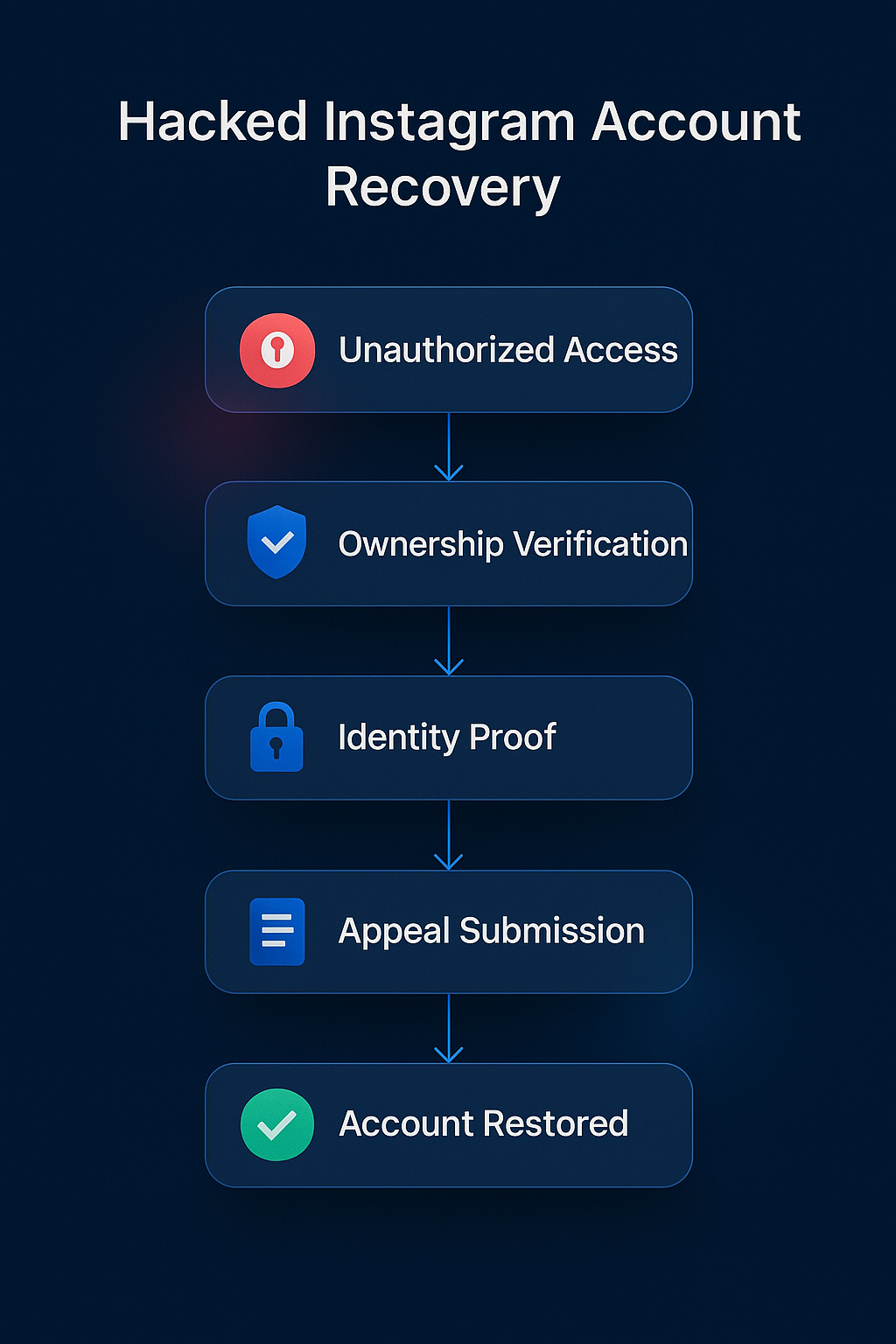
Two different requests exist and they are not interchangeable. Memorialisation freezes the profile: it stays visible, nobody can log into it, and the request can be filed by anyone with an obituary or a news article, no Instagram account required. Removal takes the profile down, and Meta restricts it to verified immediate family members, who must supply the deceased person's birth certificate and death certificate, or proof of lawful authority over the estate.
One detail catches families out. Meta will not hand over the login to a memorialised profile, whatever documentation you provide, so if the plan was to get inside the account and clear it out first, that plan does not survive contact with the policy. Choose removal or choose memorialisation, because you cannot do one by way of the other. Where the goal is releasing the handle for someone else, read the caveats in claiming an Instagram username before you promise anyone a timeline.
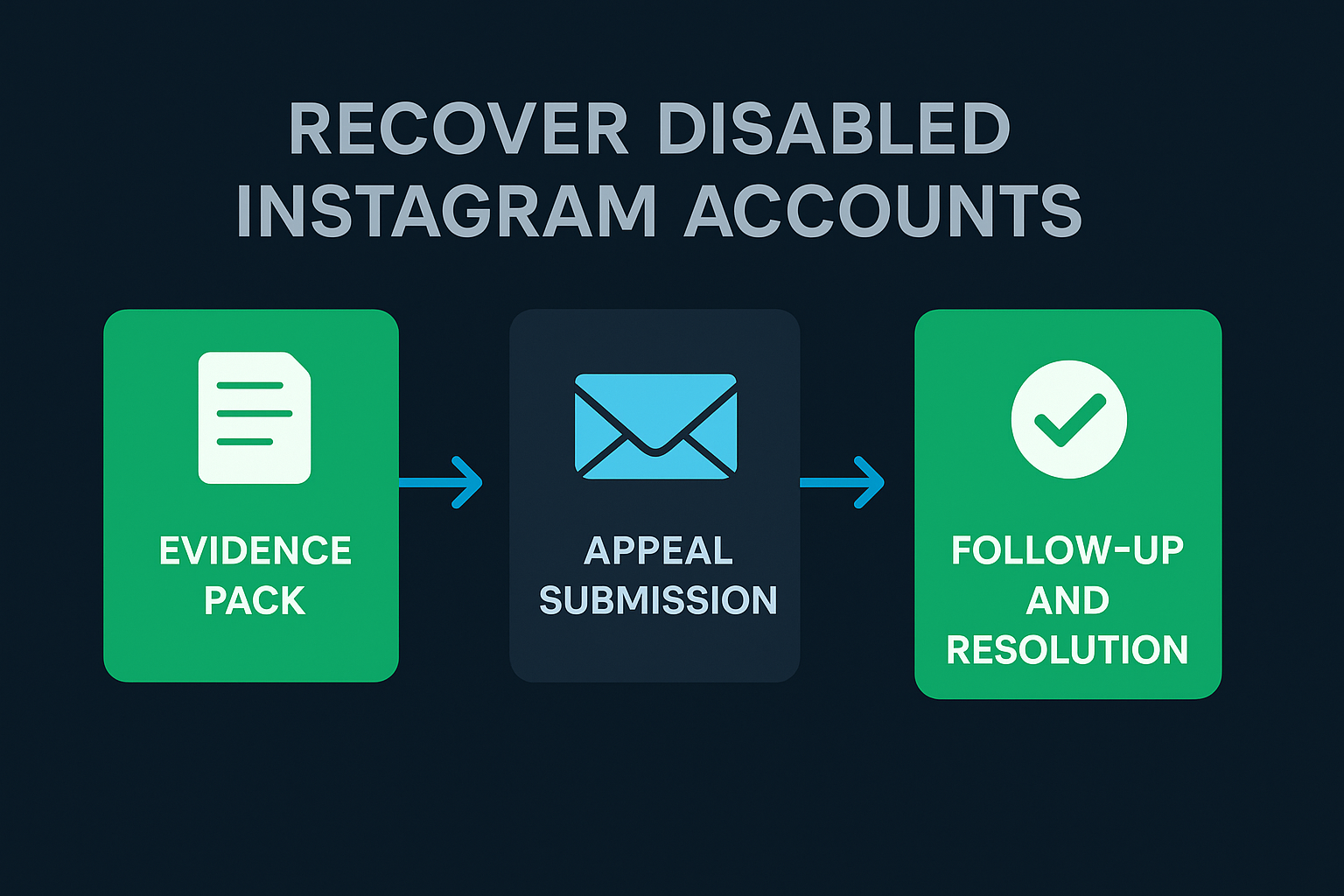
Gather the documents before you open either form. Both requests are single-shot in practice: no case number, no draft to return to, no visible queue, so a request filed with a missing certificate simply disappears instead of bouncing back with a note explaining what was wrong.
Scan both certificates together and settle the question of which outcome the family actually wants before anyone starts typing. Meta publishes no review timeframe for either request, and we would not trust a figure that claims otherwise.
How to delete someone instagram account permanently, and what permanent means
Permanent is a defined process on Instagram, and it belongs to the account holder. A deletion request opens a thirty-day window in which logging back in cancels the whole thing. After that, Meta states the profile and all of its information are permanently deleted and cannot be retrieved, with up to ninety days to complete the removal of posted content. Then comes the caveat almost nobody quotes: copies of your content may remain after the 90 days in backup storage that Meta uses to recover from a disaster, a software error or another data-loss event.
That is the only mechanism on the platform that produces a genuine, irreversible deletion, and it runs on a password. Which is precisely why the routes in the table above matter: they are not weaker versions of this one, they are a different instrument entirely. Meta's enforcement outcomes lean heavily on its own detection rather than on inbound reports, and its Integrity Reports for H1 2026, updated 19 March 2026, put the point numerically: over 159 million scam ads removed during 2025, 92% of them taken down before anyone reported them. Report volume is not the lever. We take that arithmetic apart in detail under mass reporting an Instagram account, and the same maths is why an Instagram mass report bot and the spam report bot pitch both fail, and why so few reporting tools are genuinely official. If what you want is durability rather than speed, banning an account permanently covers how a removal survives the appeal that usually follows.
Someone else's account is logged in on your phone
This is the most common version of the question and it is not a deletion problem at all. An old partner, a sibling or a former colleague left their profile signed in on your device, and removing it from the app feels like deleting it. It is not. Instagram's account switcher removes the session from your phone and leaves the account itself untouched, which is the correct outcome and almost always the one people actually wanted.
Deleting from that session would be a different act with real consequences. You would be using someone's logged-in credentials to destroy their account, which breaches Instagram's terms and, depending on where you live, computer-misuse law. Log it out and hand the problem back to its owner.
What to do with the case you actually have
Match the route to the harm, then file once and file properly. If the profile is impersonating you, the impersonation form is the one that works, and Meta will only act on reports from the person being impersonated or an authorised representative such as a parent or legal guardian. If the account is under the minimum age, use that form and expect deletion. If it is a scam, harassment or a threat, the Community Standards report is the right instrument even though its ceiling is disablement rather than deletion, and there are dedicated walkthroughs here for a stalker, for extortion, for impersonation used as blackmail, for a fake giveaway or business page and for a Story or page.
One route to stop hoping for: a court order does not open a door at Meta. Its Law Enforcement Guidelines send private party requests, including civil litigants, back to the ordinary Help Centre, and the records portal is restricted to authorised law enforcement. An order compels the person, not the platform.
Where a case is genuinely borderline, get a second read before you file rather than after a rejection. Our contact page and the wider solutions library cover the rest of the ground, including reporting and disabling an account, the four removal jobs hiding behind the word deleted, what getting someone banned really involves, and what an Instagram ban service can and cannot honestly promise. If you would rather start from the homepage, that works too.
File the under-age report yourself if that is your case; it costs a minute and needs nothing from us. For everything else, send the handle and the screenshots before you file, because the wrong form is the single most expensive mistake in this process, and Meta's own H1 2026 figures put incorrect removals at under 0.1% of actions, which tells you how rarely a rejected claim gets reversed on a second try.
FAQ
How to delete someone else's instagram account without password, if you once owned it?
Recover it first, then delete it, because Instagram's deletion screen asks for the password of the account being deleted. That route runs through instagram.com/hacked or the login-help flow, where a security code or a video selfie proves you are the owner and hands the account back to you.
How to delete someone fake account on instagram that is using your photos?
File the impersonation form as the person being impersonated. Meta accepts it only from you or an authorised representative, such as a parent or legal guardian. It asks for a photo of that person holding government ID. A stranger reporting the same profile cannot use the form on your behalf, however obvious the fake looks.
Does a disabled Instagram account get deleted?
Meta does not say so. Its disabled-account pages describe the profile disappearing from view and an appeal route staying open, but they publish no statement that the account is erased and no retention period for its data. Treat disabled as hidden and reversible, not as deleted.
Can Instagram keep the data of an account it deleted?
Some of it, and Meta says so plainly. A completed deletion removes the profile from Instagram. Copies of the content may still sit in backup storage. Meta keeps those backups to recover from a disaster, a software error or another data-loss event. The profile is gone; the backups are a separate system.
How long does Instagram take to act on a reported account?
Instagram publishes no timetable, and every 24-to-48-hour figure circulating online is invented. Severe categories move fastest because they are prioritised, while a borderline harassment case can sit for weeks and still close as a restriction rather than a removal.
Can you delete an Instagram account with a court order?
Not directly. Meta's Law Enforcement Guidelines send private parties, including civil litigants, back to the ordinary Help Centre. Its records portal is restricted to authorised law enforcement. A court order works by compelling the account holder to act, not by opening a channel into Meta for you.
Can you claim a username after the account holding it is removed?
Sometimes, and never on a schedule you control. Meta does not promise that a handle returns to the pool after removal, and memorialised profiles keep theirs indefinitely. Anyone selling a guaranteed username release is selling a timing they cannot influence.